Sakwera's Journey: From Despair to Hope in Northern Uganda
Michael Ryer • November 28, 2023
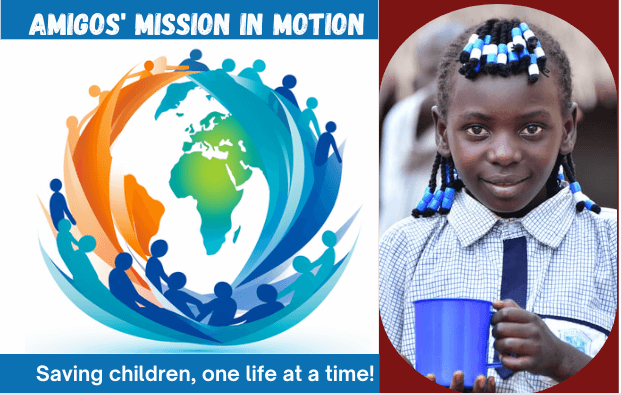
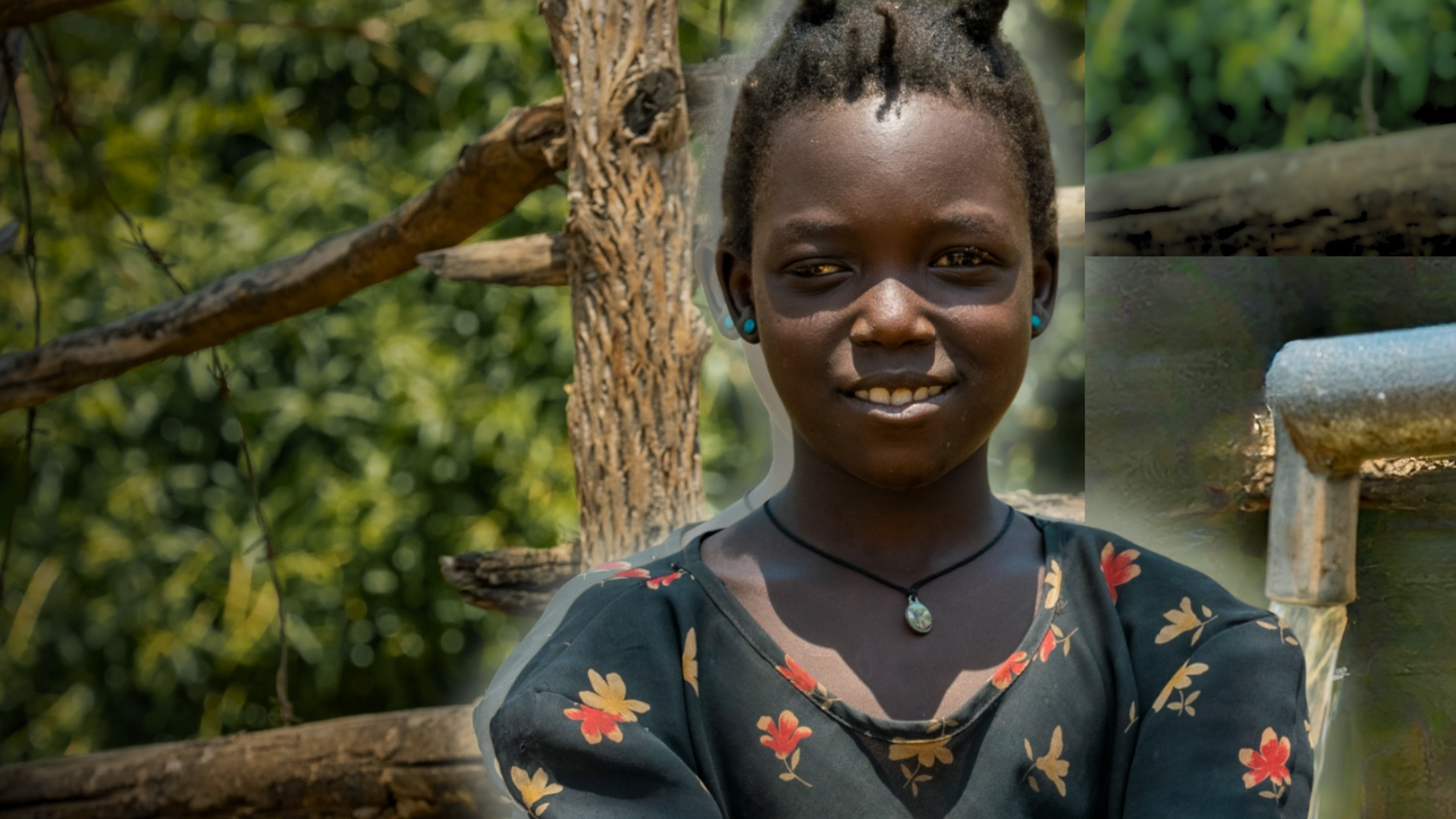
A poster for amigos mission in motion shows a girl holding a cup

In the sprawling expanse of Northern Uganda's Pawik Settlement Region, a story of remarkable courage and resilience unfolds. It's the story of Sakwera, a 12-year-old girl from South Sudan, whose journey to a new life is a poignant testament to the human spirit's capacity for hope and renewal.


Sakwera's odyssey began in her war-torn homeland, a place where childhood innocence is often the first casualty. Seeking refuge and a chance for a better life, she embarked on a perilous journey to Uganda. But the road to safety was marred by unspeakable violence. In a harrowing ordeal, Sakwera fell victim to brutal men who left her alone and vulnerable in the wilderness, and with a child.

In the sprawling expanse of Northern Uganda's Pawik Settlement Region, a story of remarkable courage and resilience unfolds. It's a story that showcases the indomitable human spirit, one that leaves us in awe of the capacity for hope and renewal. This extraordinary narrative belongs to Sakwera, a 12-year-old girl hailing from war-torn South Sudan. Her journey to a new life in the settlement is nothing short of a testament to the unwavering determination and unyielding resilience that reside within her.


Sakwera's odyssey began in her war-torn homeland, a place where childhood innocence is often the first casualty. Seeking refuge and a chance for a better life, she embarked on a perilous journey to Uganda. But the road to safety was marred by unspeakable violence. In a harrowing ordeal, Sakwera fell victim to brutal men who left her alone and vulnerable in the wilderness, and with a child.


Arriving in Pawik, Sakwera faced the daunting reality of being a young, single mother in a foreign land. Stripped of resources, support, and skills, she grappled with the overwhelming challenges of her new life. The weight of her circumstances threatened to extinguish the faint glimmer of hope that had guided her thus far.


Amidst the chaos, she found herself grappling with the harsh reality of war at a tender age. Yet, even in the face of such adversity, a flicker of hope burned fiercely within her.  Driven by an unwavering desire for a better life, Sakwera embarked on a treacherous journey, leaving behind the only world she had ever known. The path ahead was fraught with danger, uncertainty, and unimaginable hardships. But Sakwera, armed with an iron will and an unshakeable determination, pressed on.
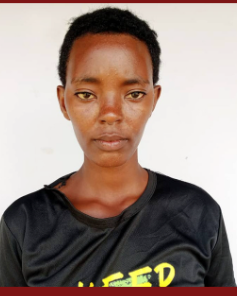
A woman wearing a black shirt with the word fed on it

As she crossed into the Pawik Settlement Region, Sakwera's story took a poignant turn. The vastness of the settlement mirrored the magnitude of her dreams, and she found solace in the embrace of her newfound community. Strangers became allies, united by their shared experiences and dreams for a brighter future.


In the midst of adversity, Sakwera discovered her own strength. She defied the odds, overcoming each obstacle with a resilience that seemed boundless. Education became her beacon of hope, a gateway to a world of possibilities. With unwavering dedication, she immersed herself in the pursuit of knowledge, determined to carve a different path for herself and those around her.


Sakwera's story is one that speaks of the triumph of the human spirit, reminding us of the power we all possess to overcome the greatest of challenges. Her journey from war-torn South Sudan to the Pawik Settlement Region stands as a testament to the unyielding capacity of hope and renewal that resides within each of us. As we delve into her narrative, we are reminded of the countless untold stories of resilience and courage that exist in the world, waiting to be discovered and shared.
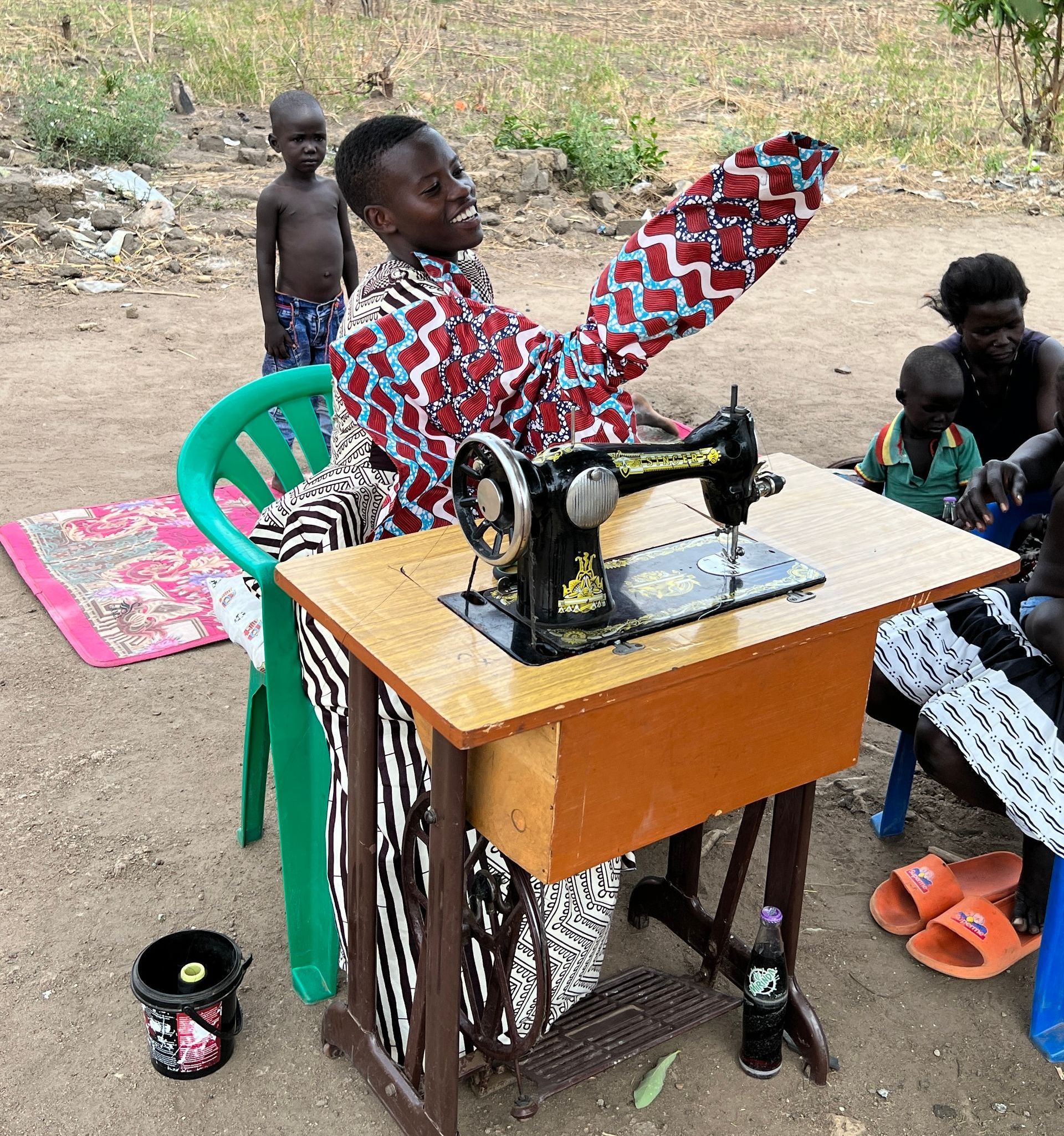
A man is sitting at a table using a sewing machine.

Yet, in this abyss of despair, a ray of light emerged. Sakwera found refuge in the Agape Baptist Church in Palabek, an Amigos Internacionales Missionpoint. This modest church became her sanctuary, a place where shattered lives found solace and strength. It was here that Sakwera's life began to transform. She embraced the teachings of Christ, finding in her faith a source of unyielding strength and comfort.


The church offered more than spiritual healing. Recognizing her plight, it provided Sakwera with an opportunity to join a life skills sewing class. This initiative was more than vocational training; it was a lifeline. For Sakwera, learning to sew meant learning to rebuild her life. Each stitch was a step towards healing, a symbol of her resilience and determination to forge a new path for herself and her child.


Sewing became Sakwera's canvas, on which she painted her dreams and aspirations. The sewing machine's hum was a melody of hope, a constant reminder that her past would not define her future. With every garment she crafted, Sakwera stitched together a new chapter of her life, one filled with possibility and promise.


Today, Sakwera stands as a beacon of hope, not only to her child but to the entire community in Pawik. Her journey from the depths of despair to a place of empowerment and self-sufficiency is a powerful narrative of survival and transformation.

Sakwera's story is a reminder that even in the darkest moments, the human spirit can thrive. It teaches us that with faith, support, and the will to persevere, new beginnings are always within reach.

You can make a difference in children and young mothers lives today.  Please consider giving...even if it just a small amount..it will make a difference in their lives.

Donate today
By Michael Ryer August 12, 2026
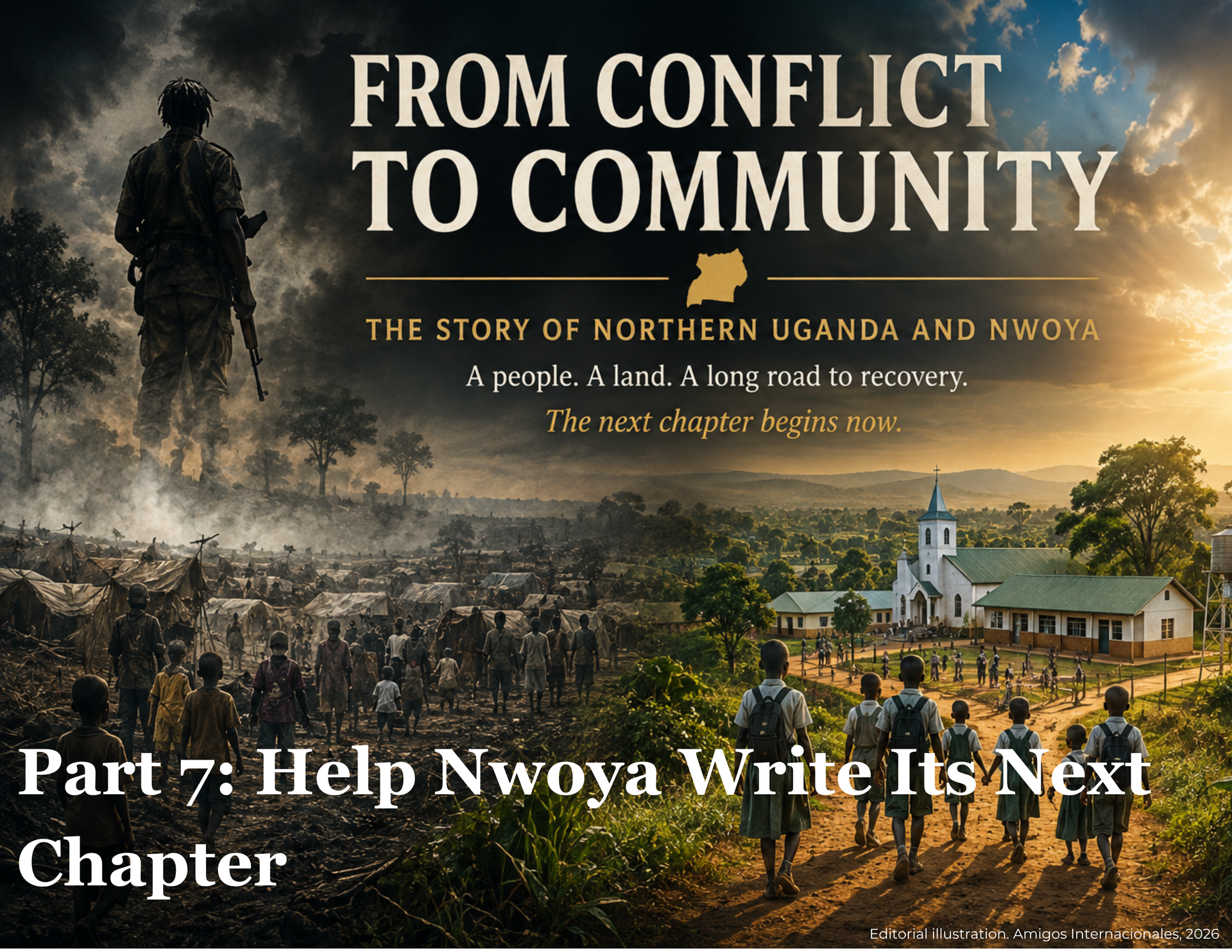
Quick answer: You can help rebuild a school and community in Nwoya District, northern Uganda, by giving to Korobar MissionPoint at amigosii.org/?give=PYEVM6DX . A gift of any size helps; $12,500 is the working target to fully repair, equip, and stabilize Orua Community Nursery and Primary School, and $1,215/month sustains it going forward. Every figure below is itemized and sourced in Part 5 of this series. Everything else in this article explains why that gift matters and to whom. What happened in northern Uganda, in three sentences
By Michael Ryer August 12, 2026
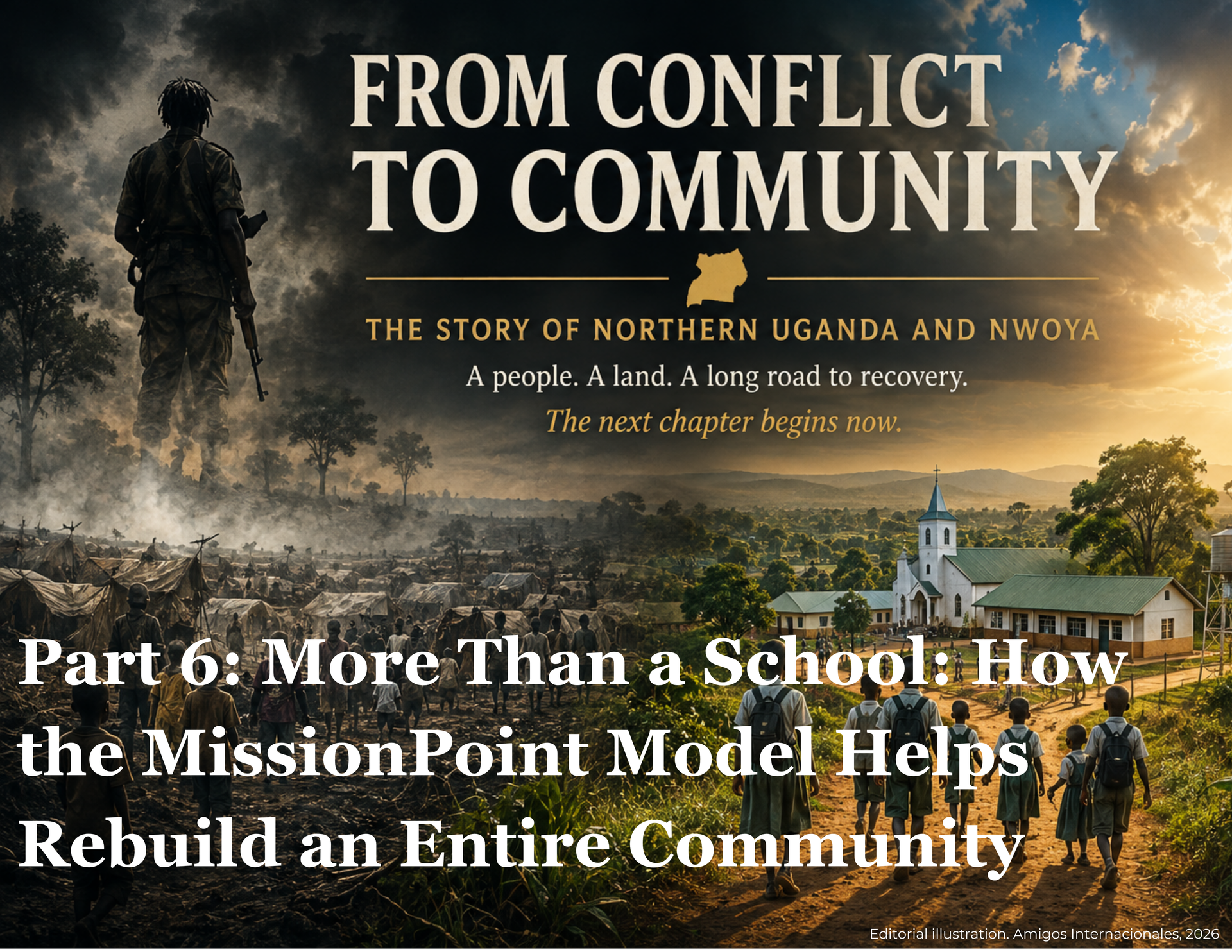
If Part 5 left you with one number, it was probably $12,500 — the working target to repair, equip, and stabilize Orua Community Nursery and Primary School. That number is real, and it matters. It's also, on its own, an incomplete picture of what Amigos Internacionales is actually trying to build in Korobar. A school, by itself, can only do so much. Children who are sick miss class. Families without clean water spend hours a day on a chore that could be minutes. A community without local pastoral leadership eventually finds its momentum depends entirely on outsiders showing up, rather than on people who live there. Amigos calls its answer to that problem a MissionPoint — and it's worth explaining plainly what that actually means, rather than letting the word do vague, inspirational work on its own.
By Michael Ryer August 12, 2026
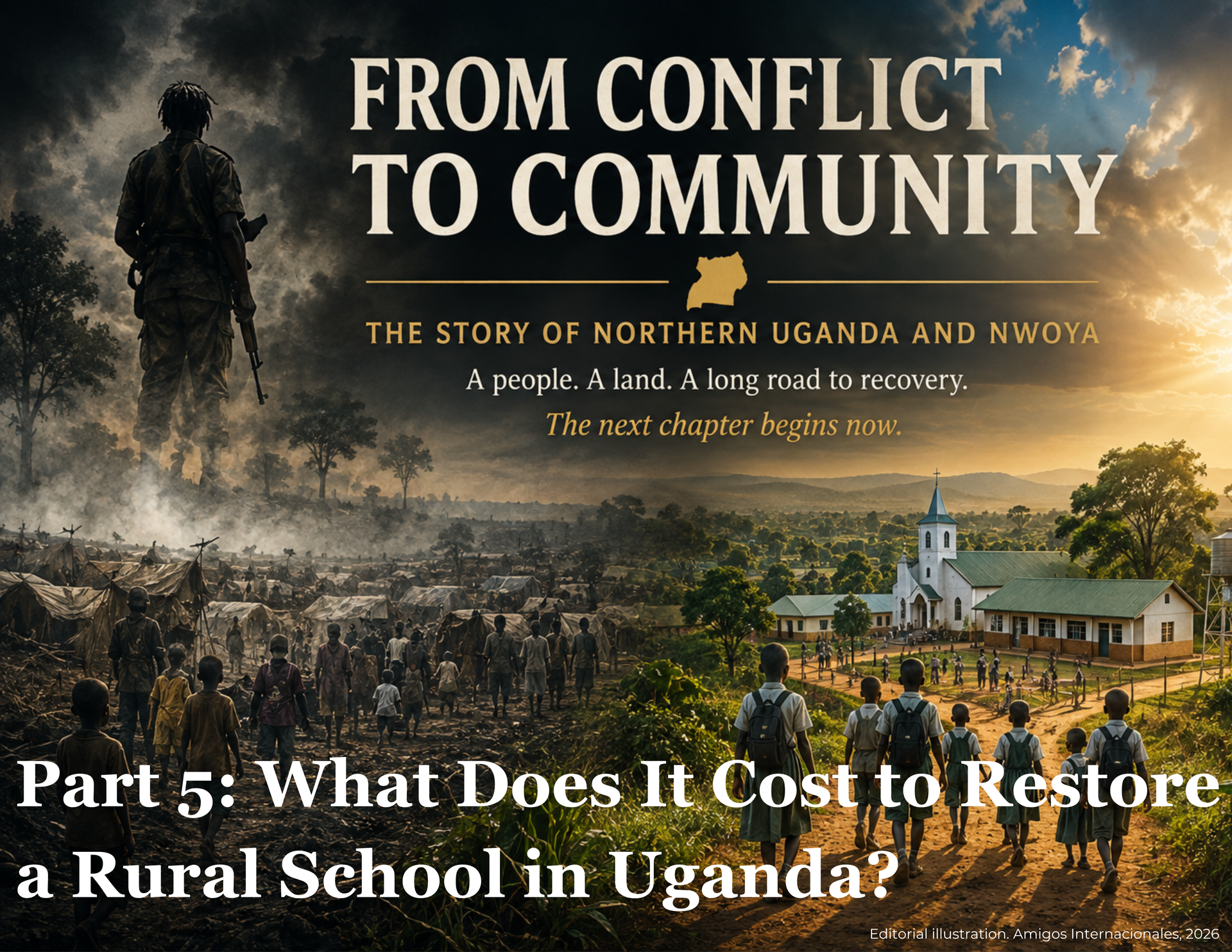
There's a number a lot of nonprofit fundraising pages love: a big, round figure — "$50,000 builds a school!" — that's easy to print on a banner and hard to actually verify. This article is the opposite of that. Part 4 of this series told the story of Orua Community Nursery and Primary School — a school parents built themselves, that nearly collapsed when payroll failed. This part answers the question every serious donor eventually asks: what does it actually cost to fix, and how do we know? The figures below come from one source: Patrick Kibwota's June 2026 site assessment, conducted after Amigos Internacionales was invited into Korobar. They are working estimates, not final audited numbers, and this article says so at every point where that distinction matters — because a transparent budget that admits its own limits is more trustworthy than a tidy one that doesn't. New to this story? Part 4 tells how Orua Community Nursery and Primary School got here. Repair, not rebuild — and why that matters financially
From Conflict to Community series illustration — Part 4: The School a Community Refused to Lose
By Michael Ryer August 10, 2026
Before Amigos arrived, this community already built its own school. Here's the story of Orua Community Nursery and Primary School in Nwoya, Uganda.
From Conflict to Community series illustration — Part 3: Nwoya's Long Road Home
By Michael Ryer August 10, 2026
From displacement camps to a growing district with its own economy — the story of how Nwoya, Uganda came home, and what it's still building.
By Michael Ryer August 5, 2026
Ask someone who grew up in Gulu District in the early 2000s what they remember most, and you won't always hear about an attack. You'll often hear about a walk. Every evening, as the light started to go, children left their homes — or their family's space inside a displacement camp — and walked toward the nearest town center. Not to visit anyone. To sleep somewhere the Lord's Resistance Army was less likely to find them. In the morning, they walked home again, went to whatever school was still functioning, and did it all again the next evening. Aid workers and journalists came to call them "night commuters," and for a few years in the middle of the war, they were one of the most visible symptoms of what the conflict was actually doing to an entire generation.
By Michael Ryer August 4, 2026
How the Lord's Resistance Army shaped Nwoya, Uganda — and how communities are rebuilding schools and futures nearly 20 years after the war ended.
By Michael Ryer July 19, 2026
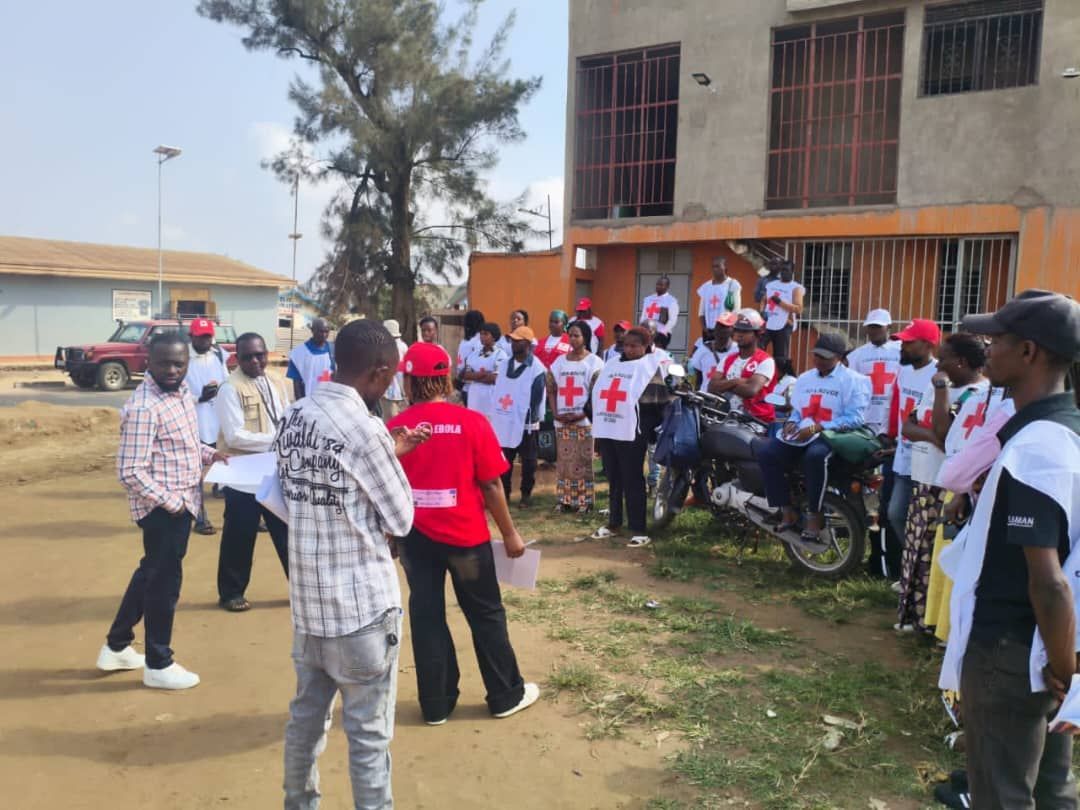
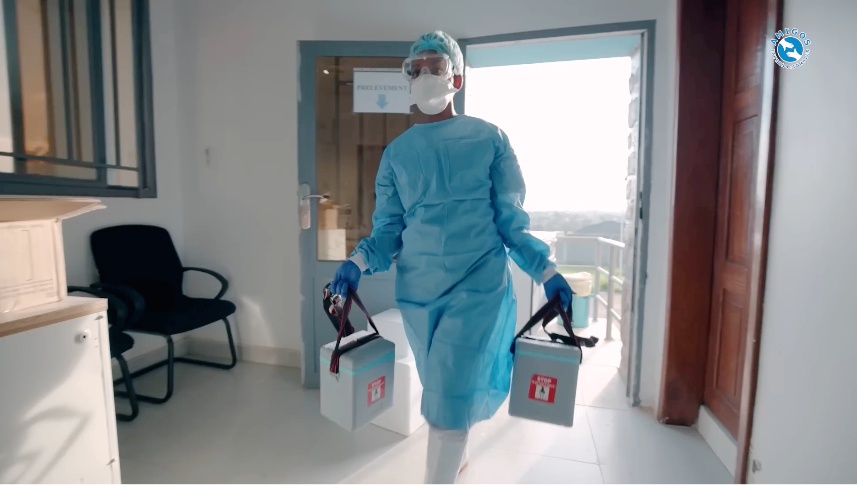
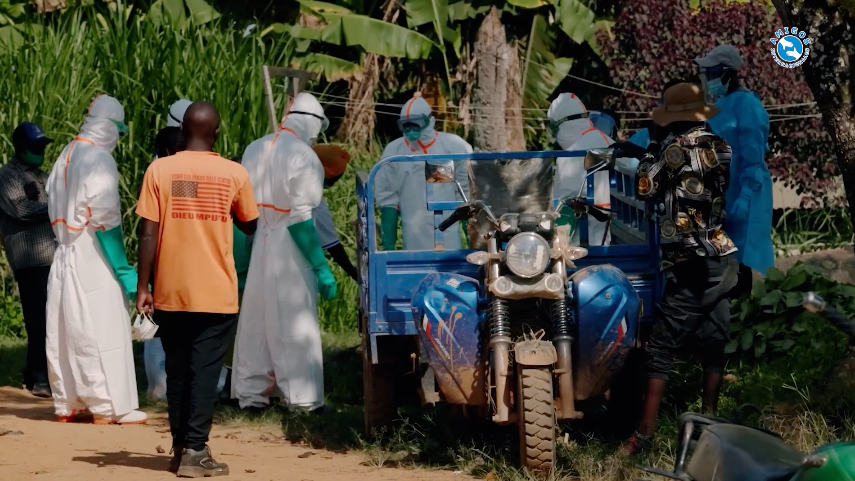
Learn how Amigos Internacionales and local health leaders are strengthening Ebola community surveillance, risk communication, and early detection across eastern Democratic Republic of Congo.
Ebola response reports
By Paul Mulyamboga July 16, 2026
Read real-time field notes from Dr. Paul Mulyamboga, Director of Medical Services for Amigos Internacionales, serving on the front lines of the Ebola outbreak in eastern Democratic Republic of Congo.
Medical teams respond to the Ebola outbreak in eastern Democratic Republic of the Congo through surv
By Michael Ryer July 3, 2026
Learn how Ebola spreads, why eastern Congo faces repeated outbreaks, and how Amigos Internacionales and Doctors on Mission International are strengthening healthcare systems.
By Michael Ryer June 9, 2026
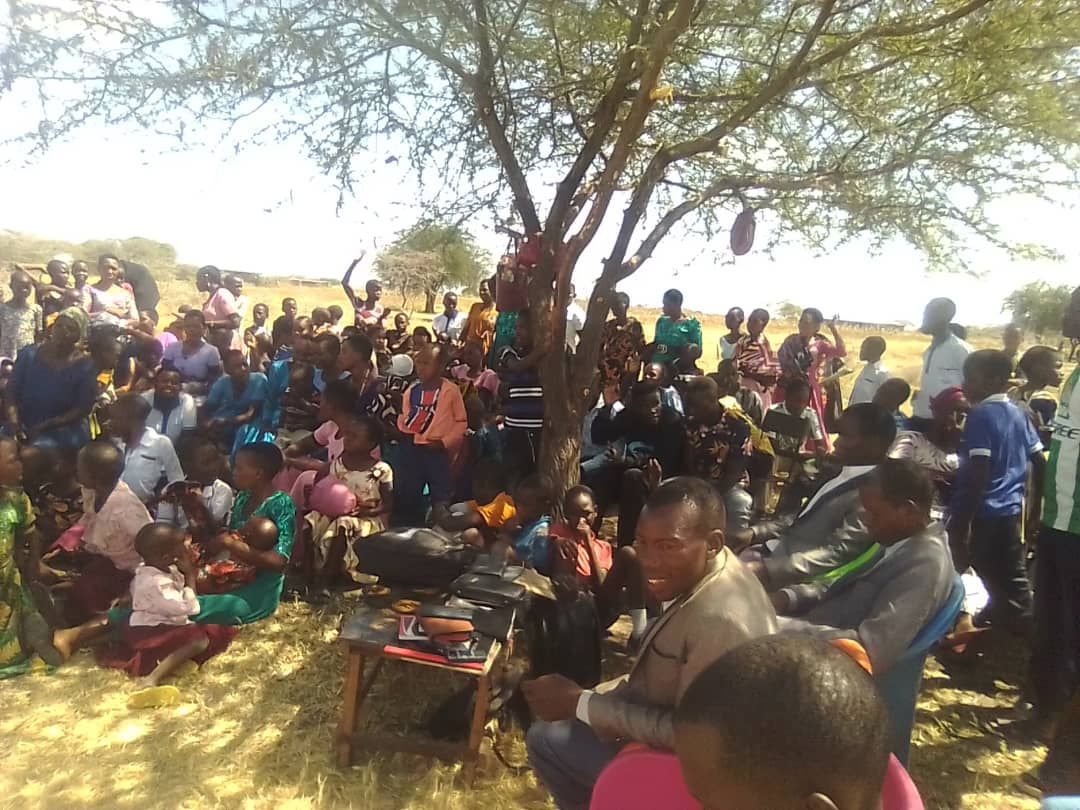
A Pentecost outreach by Pastor Abogasti became the founding of Mwakalundi Baptist Church — 80 baptized believers, first worship under a tree, in Tanzania.
By Victor Phiri June 1, 2026
More Posts

Social Media

By Michael Ryer August 12, 2026
Quick answer: You can help rebuild a school and community in Nwoya District, northern Uganda, by giving to Korobar MissionPoint at amigosii.org/?give=PYEVM6DX . A gift of any size helps; $12,500 is the working target to fully repair, equip, and stabilize Orua Community Nursery and Primary School, and $1,215/month sustains it going forward. Every figure below is itemized and sourced in Part 5 of this series. Everything else in this article explains why that gift matters and to whom. What happened in northern Uganda, in three sentences
By Michael Ryer August 12, 2026
If Part 5 left you with one number, it was probably $12,500 — the working target to repair, equip, and stabilize Orua Community Nursery and Primary School. That number is real, and it matters. It's also, on its own, an incomplete picture of what Amigos Internacionales is actually trying to build in Korobar. A school, by itself, can only do so much. Children who are sick miss class. Families without clean water spend hours a day on a chore that could be minutes. A community without local pastoral leadership eventually finds its momentum depends entirely on outsiders showing up, rather than on people who live there. Amigos calls its answer to that problem a MissionPoint — and it's worth explaining plainly what that actually means, rather than letting the word do vague, inspirational work on its own.
By Michael Ryer August 12, 2026
There's a number a lot of nonprofit fundraising pages love: a big, round figure — "$50,000 builds a school!" — that's easy to print on a banner and hard to actually verify. This article is the opposite of that. Part 4 of this series told the story of Orua Community Nursery and Primary School — a school parents built themselves, that nearly collapsed when payroll failed. This part answers the question every serious donor eventually asks: what does it actually cost to fix, and how do we know? The figures below come from one source: Patrick Kibwota's June 2026 site assessment, conducted after Amigos Internacionales was invited into Korobar. They are working estimates, not final audited numbers, and this article says so at every point where that distinction matters — because a transparent budget that admits its own limits is more trustworthy than a tidy one that doesn't. New to this story? Part 4 tells how Orua Community Nursery and Primary School got here. Repair, not rebuild — and why that matters financially
From Conflict to Community series illustration — Part 4: The School a Community Refused to Lose
By Michael Ryer August 10, 2026
Before Amigos arrived, this community already built its own school. Here's the story of Orua Community Nursery and Primary School in Nwoya, Uganda.
From Conflict to Community series illustration — Part 3: Nwoya's Long Road Home
By Michael Ryer August 10, 2026
From displacement camps to a growing district with its own economy — the story of how Nwoya, Uganda came home, and what it's still building.
By Michael Ryer August 5, 2026
Ask someone who grew up in Gulu District in the early 2000s what they remember most, and you won't always hear about an attack. You'll often hear about a walk. Every evening, as the light started to go, children left their homes — or their family's space inside a displacement camp — and walked toward the nearest town center. Not to visit anyone. To sleep somewhere the Lord's Resistance Army was less likely to find them. In the morning, they walked home again, went to whatever school was still functioning, and did it all again the next evening. Aid workers and journalists came to call them "night commuters," and for a few years in the middle of the war, they were one of the most visible symptoms of what the conflict was actually doing to an entire generation.
By Michael Ryer August 4, 2026
How the Lord's Resistance Army shaped Nwoya, Uganda — and how communities are rebuilding schools and futures nearly 20 years after the war ended.
By Michael Ryer July 19, 2026
Learn how Amigos Internacionales and local health leaders are strengthening Ebola community surveillance, risk communication, and early detection across eastern Democratic Republic of Congo.
Ebola response reports
By Paul Mulyamboga July 16, 2026
Read real-time field notes from Dr. Paul Mulyamboga, Director of Medical Services for Amigos Internacionales, serving on the front lines of the Ebola outbreak in eastern Democratic Republic of Congo.
Medical teams respond to the Ebola outbreak in eastern Democratic Republic of the Congo through surv
By Michael Ryer July 3, 2026
Learn how Ebola spreads, why eastern Congo faces repeated outbreaks, and how Amigos Internacionales and Doctors on Mission International are strengthening healthcare systems.
By Michael Ryer June 9, 2026
A Pentecost outreach by Pastor Abogasti became the founding of Mwakalundi Baptist Church — 80 baptized believers, first worship under a tree, in Tanzania.
By Victor Phiri June 1, 2026
By Warren Olgado May 25, 2026
In a small rural village in Tanzania, a man sits quietly outside his home. His body is thin. His shoulders are tired. And rising from his back is a painful tumor that has slowly stolen nearly everything from him. His name is Zakaria. For years, Zakaria worked as a boda boda driver, carrying passengers from village to village on his motorcycle. In East Africa, a boda boda is more than transportation. For many families, it is survival. Every ride meant food. Every mile meant provision. Every long day on rough roads meant another opportunity to care for his wife and continue moving forward. But suffering often enters quietly. What began as a hitching pain in Zakaria’s back slowly became swelling. At first, it was manageable. Like many men trying to provide for their families, he pushed through the discomfort and kept working. But the pain continued. The swelling grew. And over time, the tumor became impossible to ignore. Today, Zakaria lives with constant pain and uncertainty. The disease has robbed him of strength, dignity, income, and peace. The motorcycle he once depended on has already been sold in a desperate attempt to find healing. And yet, in the middle of suffering, something unexpected happened. Hope arrived.
By Michael Ryer May 20, 2026
In many parts of the world, turning on a faucet is so ordinary that it barely deserves a second thought. A glass fills. A child drinks. A mother does the dishes. A shower runs before work or school. Clean water is simply there. In Northern Uganda, that reality still feels distant for thousands of families. In many villages scattered across rural East Africa, water is not found in a kitchen sink or flowing from pipes beneath the ground. It is carried in yellow jerrycans across dusty roads and narrow footpaths. It is gathered from muddy ponds, shallow holes carved into the earth, or stagnant pools shared with livestock. Sometimes it is brown. Sometimes it smells foul. Sometimes it makes children sick. For families with no other option, it is all they have. The water crisis in East Africa is not only about thirst. It affects health, education, safety, opportunity, and dignity. It shapes how children spend their mornings and how mothers spend their days. It determines whether girls attend school consistently or remain trapped in long daily walks carrying heavy containers of water under the scorching sun. At Amigos Internacionales, this reality is not theoretical. Staff and partners have sat beside families in remote villages. They have watched children scoop water from contaminated pits after rainfall. They have seen entire communities transformed when clean water finally arrived. That transformation is why water remains one of the most urgent and powerful parts of the MissionPoint model across Northern Uganda.
By Michael Ryer May 13, 2026
For seventeen years, Bridgette has carried a burden no child should ever bear. What started as a small red spot on her face when she was just a baby grew into a massive vascular tumor that doctors across Uganda refused to operate on. Too risky, they said. The tumor could bleed too much. She might not survive. Come back when she's older. Come back when it's smaller. Come back, come back, come back. Bridgette and her mother, Rose, heard "no" for seventeen years. But today, something has finally changed. Bridgette is now on medication that is actively shrinking her tumor. Dr. Paul Mulyamboga, Amigos Internacionales' Director of Medical Services and founder of Doctors on Mission, is monitoring her progress. When the tumor reaches an operable size, he will refer her to Mulago National Referral Hospital in Kampala for the vascular surgery that could change her life. There's just one problem: surgery can only happen if the funding is already in place . If we don't raise $12,000 before Bridgette's tumor is ready for surgery, she will have to wait again. And after seventeen years of waiting, we cannot let that happen. How It Started — A Small Red Spot
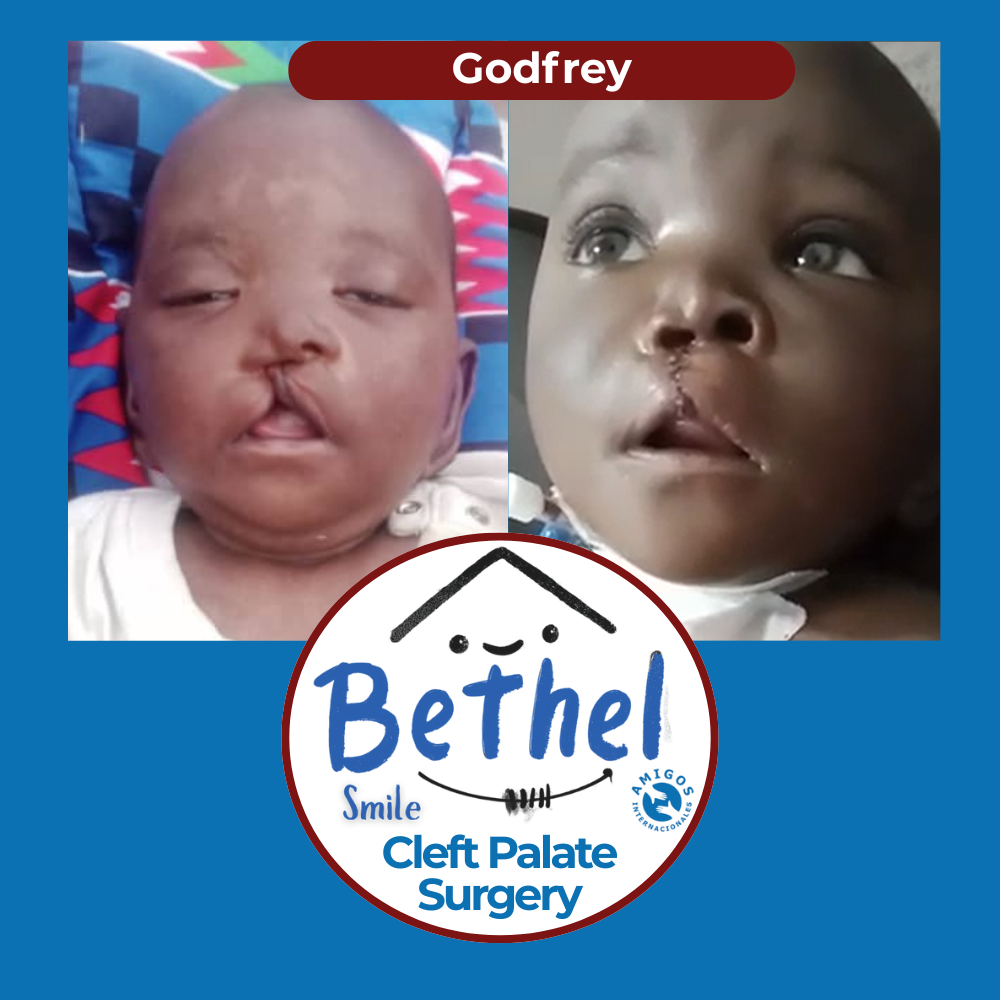
Rwottwero Godfrey before and after cleft lip surgery — Bethel Smile program, Amigos Internacionales
By Amigos Internacionales April 30, 2026
Baby Godfrey couldn't eat without pain. His family couldn't afford surgery. The Bethel Smile program gave him free cleft lip surgery at 4 months old.
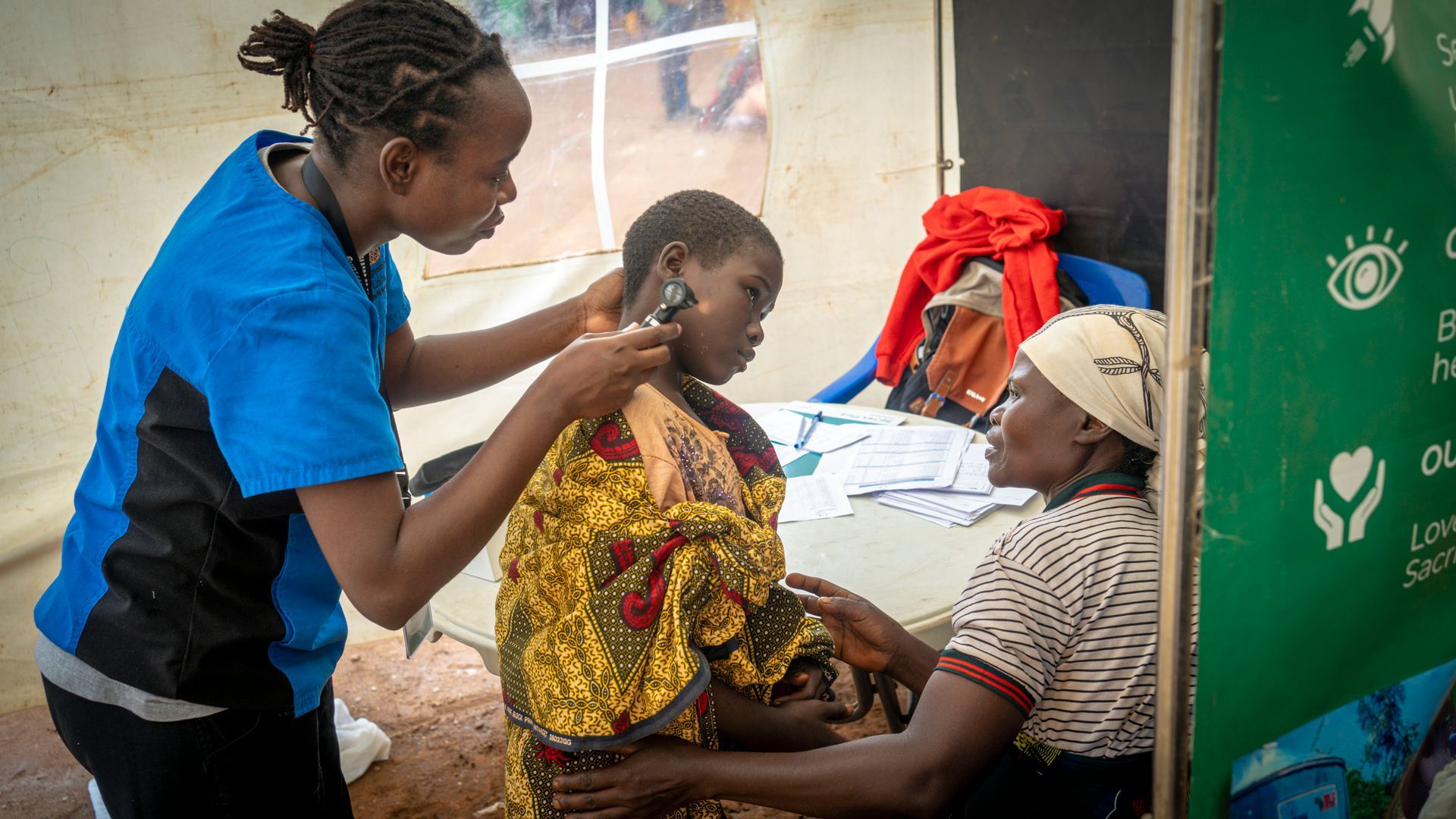
MissionPoint Burundi free medical camp in Gisuru, doctors treating patients
By Amigos Internacionales April 28, 2026
Inside the Gisuru medical camp in Burundi — surgeries, eye care, and spiritual ministry delivered by volunteer doctors. See the full impact report from 2025.
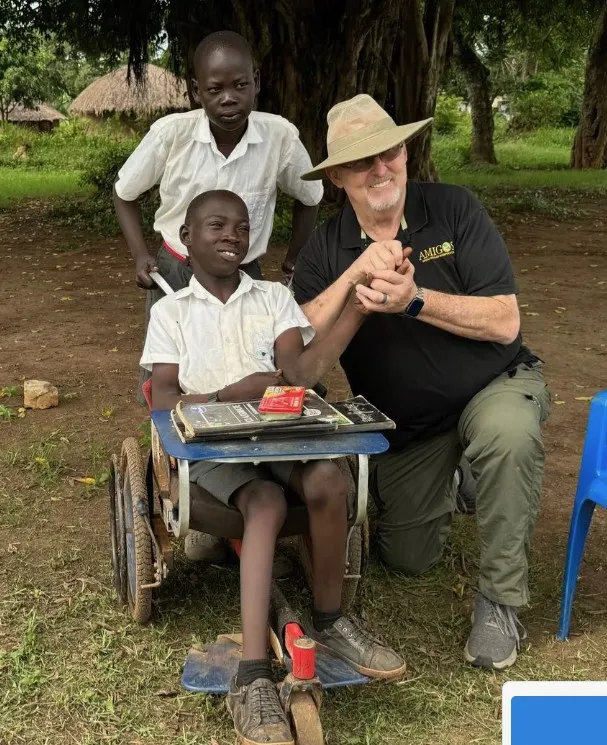
Two people beside a wheelchair outside, with a child seated at a small desk in a grassy outdoor area.
By Amigos Internacionales April 27, 2026
East Texas journalist Jennifer Scott traveled to East Africa to cover Amigos Internacionales. Read the full Tyler Morning Telegraph feature from April 2026.
By Amigos Internacionales April 13, 2026
Learn how church missions in Africa, through partnerships with Amigos Internacionales, can bring lasting change to communities in need. Get involved in education, healthcare, and development projects.
By Amigos Internacionales April 9, 2026
Discover the resilience of refugees in Northern Uganda and how Amigos Internacionales is providing medical care, education, and empowerment to help rebuild lives.
Show More