

A MissionPoint is not a single project. It is a local church in a specific village, strengthened to become the hub for everything that community needs to thrive: clean water, basic health care, education, and a sustainable local economy. Ogul, Uganda, is one of the clearest examples of what that looks like once it takes root.
What Is a MissionPoint?
Amigos Internacionales builds its long-term work around local churches rather than around outside staff. A MissionPoint is a church that agrees to serve as that hub: a place families already trust, led by people who already live there and plan to stay there long after any outside team leaves. Instead of parachuting in a single intervention, water or a school or a clinic, Amigos works with the church and the community to build toward all of them, in the order the community says it needs them most.
Ogul is a working example of this model, anchored by Agape Baptist Church.

Ogul: The Model in Action
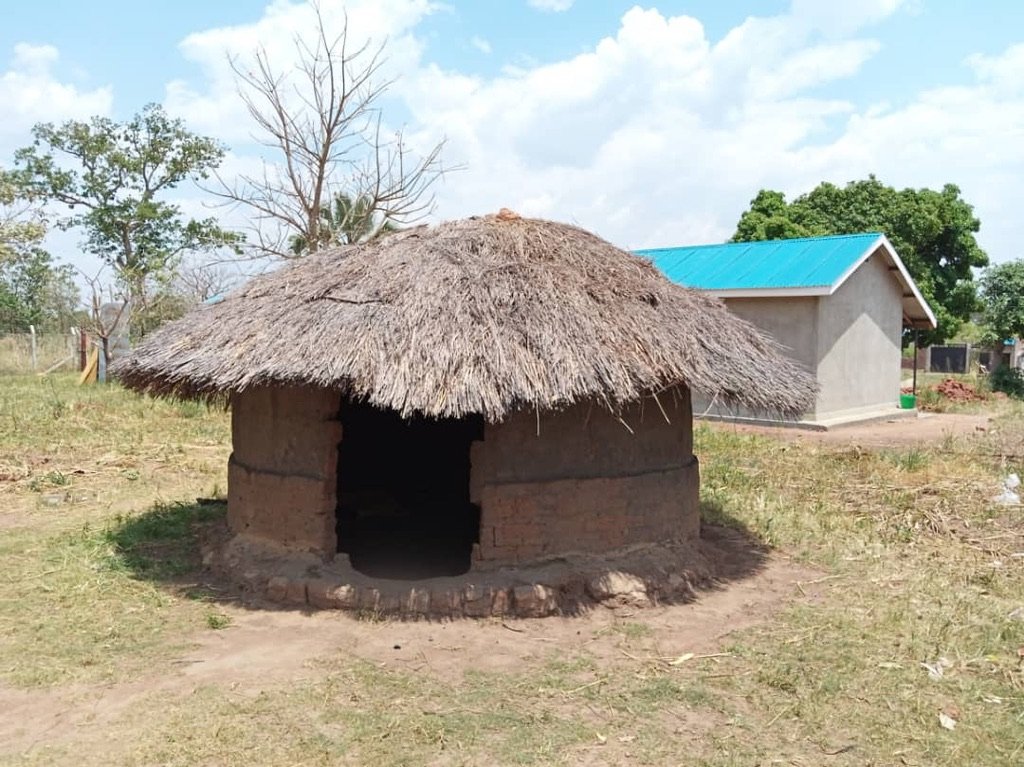
Before any new construction, Ogul looked like most rural villages in northern Uganda: homes and gathering spaces built from mud brick and thatch, clustered under eucalyptus trees, with no permanent structure built to outlast a single generation of weather.

That is the starting point for nearly every MissionPoint: a real community, with a real church already present, and a real gap between what exists and what the community says it needs next. The photo below shows that transition already underway at Ogul — a traditional thatched hut standing beside new, permanent construction with a metal roof.

How Water, Church, Education and Health Fit Together
A MissionPoint is built in layers, not as one project with a single finish line. Depending on what a community identifies as most urgent, that can include:
- Clean water — a well close enough to reduce disease and give back the hours families lose walking to unsafe sources.
- Medical care — clinics, medical camps, and referral partnerships that bring treatment within reach.
- Education — functioning classrooms and the basic repairs that keep a school usable through the rainy season.
- Church leadership — a congregation equipped to keep leading the community long after a construction crew leaves.
- Food security — support for the seasons when a harvest fails or arrives late.
The order matters less than the sequencing logic: each layer is meant to make the next one possible. Clean water reduces the illness that keeps children out of class. A functioning school keeps a community anchored long enough for economic and spiritual leadership to take root. None of it depends on Amigos staying permanently, because none of it was ever designed to.
Why Local Leadership Is the Real Infrastructure
The buildings at Ogul matter, but they are not the point. The point is who is left standing in front of them once the building is finished: a local pastor, a local congregation, and a community that already knows how to keep a shared project running. That is the piece an outside organization can never permanently supply, and it is the piece a MissionPoint is specifically designed to grow instead of replace.
This is also why Amigos resists the instinct to measure a MissionPoint only by what gets built. A well without someone trained to maintain it fails within a few years. A school without local ownership struggles to outlast its first generation of students. A MissionPoint only works when the structure and the leadership are built at the same time, by the same community, for the same reasons.
HELP BUILD THE NEXT MISSIONPOINT
Ogul is one MissionPoint among many Amigos is developing across Uganda, Tanzania, Malawi, and beyond. Every one starts the same way: a local church, a real community need, and a plan built to outlast the people who started it.
FAQs
- What is a MissionPoint?
A MissionPoint is a local church that Amigos Internacionales equips to serve as a lasting hub for its community’s water, health, education, and economic needs, led by people who already live there. - How does an integrated MissionPoint work?
Instead of funding one isolated project, Amigos builds layered support — water, medical care, education, and church leadership — sequenced so each piece makes the next one possible. - How do water, church, education and health fit together in this model?
Clean water reduces the illness that keeps children from attending school; a functioning school keeps families anchored in the community; and a trained local church keeps all of it running after construction ends. - What makes Ogul Village an example of the MissionPoint model?
Ogul shows the model mid-transition: a community built from traditional thatched structures now building permanent infrastructure around Agape Baptist Church, its local hub.
Leave a Reply